There is a morning in late March when the garden stops being quiet. A robin starts up somewhere behind the shed, a blackbird answers from the chimney pot, and within ten minutes the whole street sounds like an orchestra tuning up. It is wonderful, and it is also completely baffling. Which bird is making which noise?
The good news is that you do not need expensive equipment or a degree in ornithology. A kitchen window, a mug of tea and the patience to learn half a dozen songs properly will do. Get those six or seven under your belt and the rest of the chorus begins to unpick itself.
Why Spring Is the Best Time to Learn Birdsong
Birds sing for two reasons: to claim a patch and to attract a mate. That means song peaks between March and June, when territories are being fought over and pairs are forming. Our resident birds — robins, blackbirds, song thrushes, great tits — have been at it on mild days since January, but in spring they commit properly. Migrants such as chiffchaffs, blackcaps and willow warblers arrive to add their voices from mid-March onwards.
Timing matters more than talent. The half hour before sunrise is the best listening of the year: the air is still and cool, which carries sound, and there is less traffic and fewer lawnmowers. As a rule of thumb, robins, song thrushes and blackbirds start earliest, often while it is still genuinely dark; wrens, dunnocks, tits and finches join as the light comes up. If early mornings are not realistic, dusk gives you a shorter, gentler version of the same thing.
Start With the Three Loudest Voices
Learn these three and you will recognise them for the rest of your life.
Robin
Bright, liquid and slightly wistful: high, clear notes that ripple along and then stop, as though the bird is thinking about it. Robins sing almost all year, including mild winter days and, near streetlights, the middle of the night. Their alarm call is a sharp, ticking tic-tic-tic.
Blackbird
Low, rich and flute-like, unhurried, with real pauses between phrases. Blackbirds often sing from a roof ridge or the top of a hedge at dawn and again at dusk, and those silences are part of the sound. The alarm is a loud clattering chook-chook-chook, usually with a thin, high seee if a cat is about.
Song Thrush
If a bird repeats itself, it is usually a song thrush. Each phrase is sung two, three or four times before the bird moves on to the next one. It is loud and confident, delivered from a high, exposed perch. Its cousin the mistle thrush is wilder and more mournful, and famously sings in wind and rain from the top of a tall tree — hence its old name, storm cock.
The Two- and Three-Note Crowd
Some of the easiest songs in the garden are the ones you can say out loud. Mnemonics are corny, but they work.
- Woodpigeon — five lazy notes with the second one stressed. “My toe bleeds, Betty.” Often followed by a husky coo.
- Collared dove — three notes, coo-COO-cuk, repeated for what feels like hours.
- Great tit — a ringing two-note teacher-teacher, or a saw-sharpening swee-swee-swee that goes on just long enough to be annoying.
- Chiffchaff — says its own name, evenly, endlessly, from the top of a tree.
- Blue tit — a thin, high see-see-see-see that tumbles into a scolding chatter.
- Coal tit — a high, insistent pee-choo, like a bicycle pump, often from a conifer.
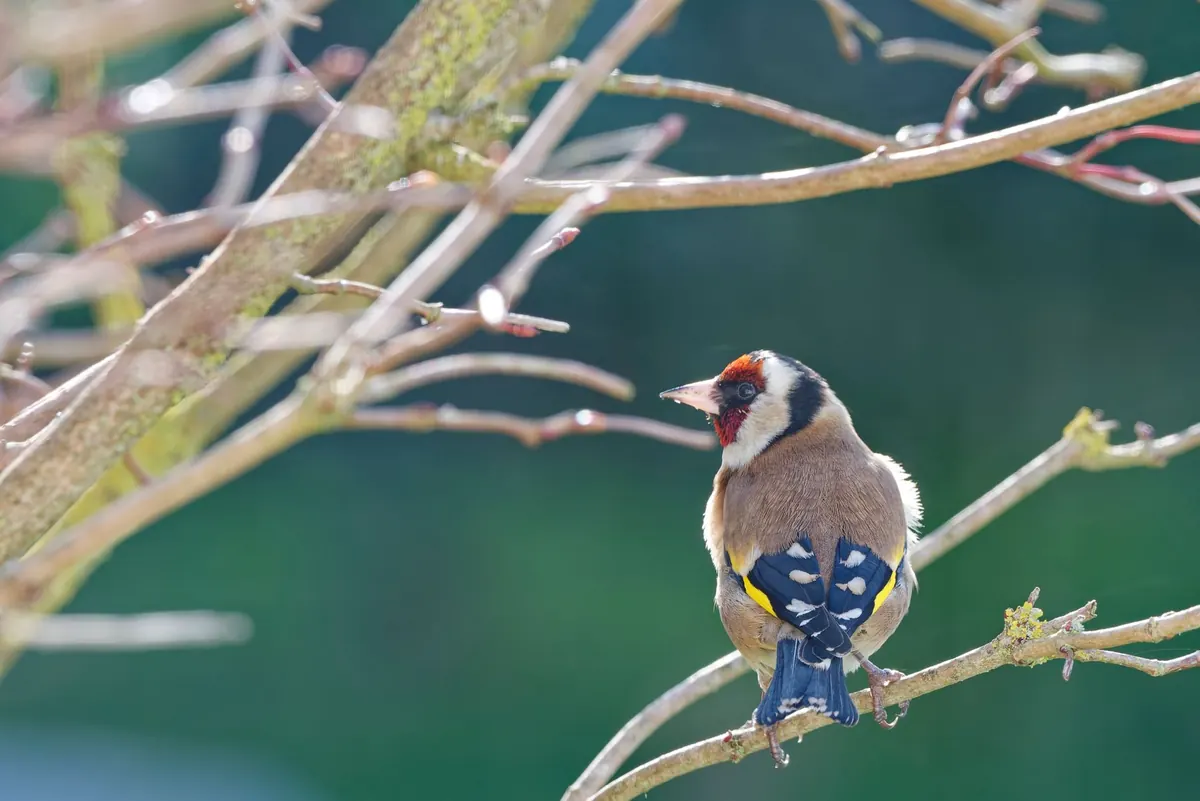
- Goldfinch — a tinkling, tumbling twitter, like a tiny bell that keeps almost falling over.
- Greenfinch — a nasal, wheezy dzweee mixed into a chattering song.
- Chaffinch — a confident cascade ending in a flourish, which varies noticeably from region to region.
Tits, Finches and the Small Brown Birds
The wren is worth singling out. It is tiny and its song is enormous — a hurried burst of notes ending in a hard, rattling trill, delivered from a bush, a log pile or the top of a shed. If the volume seems impossible for the size of the bird, it is a wren.
The dunnock, a quiet grey-brown bird that shuffles about under hedges, has a thin, hurried, sweet warble that is easy to miss because it is sung softly and low down. Get down to the bird's level and it becomes far clearer.
Starlings whistle, click, rattle and imitate — other birds, car alarms, ringtones. House sparrows chirrup rather than sing, a busy communal chattering from the hedge. And the blackcap, which increasingly overwinters here, has a rich, fluty song with a scratchy opening: a blackbird that has been listening to a robin, roughly speaking.
Song, Call and Alarm
Song is the long, structured performance, all territory and courtship. Calls are short and functional: contact, flight, alarm, begging. Learning the difference stops you chasing a song that is not one. Most garden birds have a contact call for keeping in touch, an alarm call, and a flight call, and the alarm calls are often the fastest route to working out what is in the hedge.
A Simple Method for a Spring Morning
- Pick one spot and one time. Same window, same mug, same fifteen minutes, three mornings a week.
- Listen before you look. Name the sound first, then go and find the singer.
- Follow one voice at a time. Do not try to untangle the whole chorus at once.
- Say the rhythm out loud. If a mnemonic sticks, you will still have it next spring.
- Count the repeats. Two, three, four — that is a song thrush.
- Move slowly. Song stops the moment you stride at a hedge.
Keeping a Garden List
Write down what you hear and when, even if the note just says “the loud one at half five”. A page in the back of a notebook or a note on your phone is enough. Over a single spring you will build a personal calendar: the first chiffchaff, the week the blackbirds went quiet, the morning the swifts started screaming over the rooftops. That calendar is worth more than any app, because it is about your garden.
Once you can pick out six songs, you will start hearing the seventh and eighth. Put a chair near a window, leave the washing-up for later, and give it twenty minutes before the day properly starts. Late April dawns are the richest of the year, and they do not last long.
Photo: Franck LUCE / Pexels