Every spring, the same question turns up at the potting bench: do you really need a separate bag of seed compost, or will the multi-purpose you already have do the job? The honest answer is that both have their place, and the difference between them matters most in the first few weeks of a plant's life. Get the choice right and seedlings come away strongly. Get it wrong and you spend June wondering why nothing came up. Here is how the two composts differ, and when to reach for each.
What seed compost actually is
Seed compost is a fine-grade growing medium with a deliberately low nutrient level. That last part surprises people. It sounds like a weakness, but it is the whole point. A newly germinated seedling has tiny, hair-fine roots that cannot cope with a rich mix, and too much fertiliser at that stage encourages soft, sappy growth that flops and attracts pests.
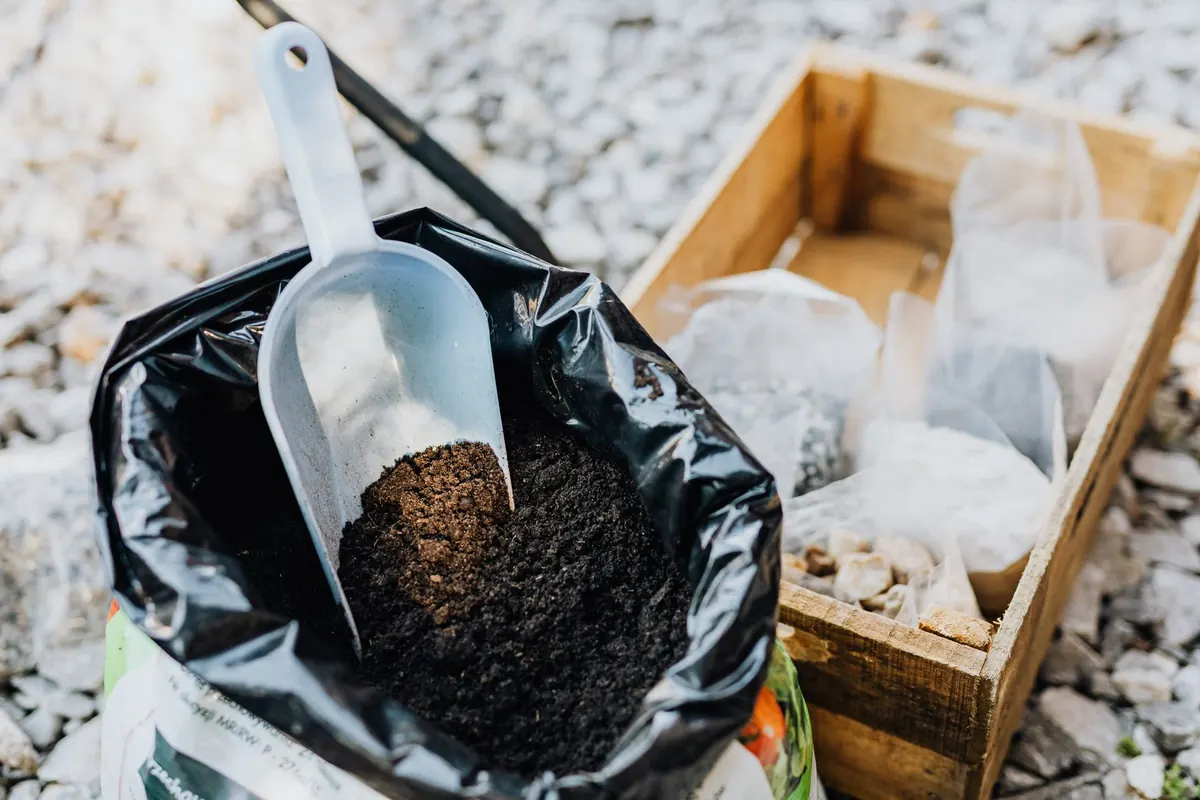
Texture matters just as much. Seed compost is sieved to a fine, even crumb so small seeds sit in close contact with moisture rather than falling into gaps between lumps of bark. It usually drains freely, with sand, fine grit or perlite worked through it. Some bags are loam-based — John Innes seed compost is the classic example, made from loam, sand and a small amount of nutrient — while peat-free versions rely on finely milled coir, wood fibre or composted bark. Whichever you buy, the grade should feel soft and slightly damp in the hand, not gritty or lumpy.
What multi-purpose compost brings to the table
Multi-purpose compost is blended for plants that are already up and growing. It has a coarser structure, holds more water, and comes with a starter charge of fertiliser that typically feeds for around four to six weeks, depending on the brand and the weather. After that, you take over with liquid feed.
It suits the vast majority of jobs in a British garden: potting on young plants, filling containers and hanging baskets, growing tomatoes and chillies in pots, and bulking up borders. Peat-free multi-purpose varies more between brands than the old peat-based stuff did, so it is worth opening the bag and feeling it before you commit to a big order. Some are heavy and woody, others light and airy. Neither is wrong, but you will need to adjust your watering to suit.
The differences that matter in practice
Strip away the branding and the two products differ in five ways:
- Particle size. Seed compost is fine and uniform; multi-purpose is coarser, with visible pieces of bark or fibre.
- Nutrient level. Seed compost is deliberately lean, while multi-purpose carries enough feed for several weeks.
- Water and air. Seed compost drains sharply, which suits germination trays. Multi-purpose holds more moisture, which suits established roots in pots.
- Consistency. Seed compost is made to a tight specification because germination is unforgiving. Multi-purpose is more variable.
- Cost and shelf life. Seed compost is usually dearer per litre and sold in smaller bags. Both are best used fresh within the season.
Sowing: where seed compost earns its keep
For anything with small seeds — foxgloves, lobelia, petunias, lettuce, brassicas, tomatoes — seed compost is worth the extra money. Fine seed needs to be sown shallowly, sometimes barely covered, and a fine tilth keeps it in contact with damp compost instead of letting it dry out on a lump of bark.
Large seeds are a different story. Beans, sweet peas, sunflowers, courgettes and nasturtiums carry their own food reserves and push out chunky roots. They germinate perfectly well in multi-purpose, which saves you a bag. Sow them on their edge, water, and keep them somewhere warm.
If you want to sow small seeds in multi-purpose, you can make it work. Riddle it through a garden sieve to remove the lumps, then mix roughly two parts sieved compost with one part horticultural grit or perlite. Water from below with a fine rose, and keep the trays covered until the first green shoots appear.
Potting on, cuttings and long-term containers
Once seedlings have their first true leaves and are ready to be pricked out, move them into multi-purpose. The extra nutrients and moisture are exactly what they need now, and the coarser texture gives roots room to spread.
Cuttings sit somewhere between the two. A lean mix encourages roots rather than leafy growth, so use seed compost, or multi-purpose cut fifty-fifty with grit or perlite. Rich compost tends to produce soft cuttings that rot before they root.
For containers, multi-purpose is the default, with slow-release feed mixed in and liquid feeding once plants are growing hard. If you are planting something that will stay put for years — a shrub, a small tree, an agapanthus in a big pot — a loam-based John Innes mix holds its structure far longer than a general-purpose bag.
Storing, reusing and labelling
Buy fresh compost each season for anything to do with sowing or cuttings. Spent compost from last year's pots has collapsed structurally and may carry damping-off fungi, so it belongs on the border as a soil conditioner, not in your seed trays. Keep opened bags somewhere cool and dry, off the ground and sealed against slugs and vine weevils, and label every tray with the plant name and the date sown. Future you will be grateful.
A simple rule of thumb for choosing
Keep both if you have the space and the budget. One bag of seed compost will sow far more than you expect, and multi-purpose will be used by the barrowload. Use seed compost for small seeds and cuttings, multi-purpose for potting on, containers and anything with a decent-sized seed. If you can only buy one bag, buy multi-purpose and sieve it for sowing.
And when in doubt, lean towards the leaner mix. Seedlings recover from a slow start far more readily than they recover from being scorched by too much feed.