Lavender looks so at home in a British cottage border that it is easy to forget where it comes from. The plants we grow are Mediterranean shrubs, happiest on stony hillsides with hot, dry summers and cool but free-draining winters. Our climate is wetter, our soil is often heavier, and our summers are shorter than it would choose. That mismatch explains most lavender disappointments: grey, leggy plants that flower once, split open in the middle and then die back over winter. Almost always the plant is not being difficult. It is being planted, fed, cut or positioned in a way that would suit a rose or a lupin rather than a sun-loving shrub.
Planting into soil that stays wet
Winter wet kills more lavender in the UK than cold ever does. The plant may look fine in July and be dead by February, with a blackened base and roots that have rotted away. Cold, saturated clay is the worst offender, especially in a low corner of the garden where water sits after rain.
Before you buy anything, test the spot. Dig a hole about 30cm deep, fill it with water and see how long it takes to disappear. If the hole is still half full after a couple of hours, lavender will struggle there without help. There are several ways to give it the drainage it needs:
- Plant on a mound. Mix the excavated soil with plenty of horticultural grit, then plant so the rootball sits a few centimetres above the surrounding ground level. Water runs away downhill instead of pooling around the crown.
- Use a raised bed or bank. Even 20–30cm of extra height makes a real difference on heavy soil, and lavender looks excellent spilling over a low wall.
- Improve a generous area, not just the planting hole. Fork two or three buckets of 5–10mm grit into the surrounding soil as well, otherwise you have created a sump that fills with water from the sides.
- Choose the slope. A gentle incline, even in a small garden, drains far better than a flat border at the bottom of it.
- In pots: use a soil-based compost such as John Innes No. 2 mixed roughly half and half with grit, plant in terracotta rather than plastic, raise the pot on feet and never leave it standing in a saucer.
Feeding and mulching as if it were a hungry border plant
Lavender is a lean-soil plant. Manure, rich compost, blood, fish and bone, or a general-purpose feed all push it into soft, sappy growth that flops, flowers poorly, and is far more likely to be damaged by frost and fungal problems. Established plants in open ground need no feeding at all. Plants in containers are the exception: a weak liquid tomato feed every few weeks from early summer until the flowers fade is usually plenty.
Mulch is another trap. Bark chips and well-rotted manure hold moisture around the stems, which is exactly what you do not want. Use gravel or grit instead, spread thinly around the plant but kept clear of the stem itself. If your soil is on the acidic side, a light dressing of garden lime in late winter will nudge it towards the neutral to slightly alkaline conditions lavender prefers. Aim to keep the collar of the plant — where stem meets root — dry and open to the air, and never bury it deeper than it sat in its pot.
Pruning too hard, too late, or not at all
Left alone, lavender becomes a tangle of bare, woody stems with a few flowers on top. Cut back too severely, though, and it may never recover, because lavender rarely produces new shoots from old, leafless wood. The reliable rule is simple: never cut past the green.
Trim straight after flowering, usually late July into August. Take off the spent flower stems plus roughly 2–5cm of leafy growth, shaping the plant into a loose dome rather than a flat-topped box. In spring, once you can see new shoots pushing from the stems — often March or April — tidy the tips and snip out anything killed over winter.
Avoid any serious cutting in autumn in colder, wetter gardens. Fresh wounds and soft regrowth going into winter invite dieback. And if you inherit a lavender that is already bare in the middle, resist the urge to cut it to the ground in hope of renewal. It is kinder to replace it, and quicker.
Siting it in shade, competition or a damp hollow
Lavender wants full sun: six hours a day at minimum, and more is better. In shade it stretches, turns grey-green and dull, flowers sparsely and picks up fungal disease. A south-facing wall or a sunny gravel border is close to ideal, partly because the reflected warmth and dry air around it suit the plant.
Watch out for less obvious problems, too. Roots of nearby trees and shrubs steal both water and nutrients, and lavender sulks under them. Frost pockets at the bottom of a slope, spots beside a downpipe, and borders that stay damp and airless after rain will all shorten its life.
Check the type as well as the spot
English lavender, Lavandula angustifolia, and its many cultivars are the safest choice for most UK gardens: compact, hardy and strongly scented. Lavandins, Lavandula × intermedia, are larger and later, good for hedges but slightly less tough. French and Spanish lavenders — L. stoechas and L. dentata — are not reliably hardy here. Treat them as container plants to be moved into a cold greenhouse or sheltered porch for winter, or accept that they may be short-lived.
Planting at the wrong moment, depth or spacing
Timing matters more than many gardeners expect. On heavy, wet soil, spring planting gives roots a full season to establish before the first winter. On light, sharply drained soil, early autumn works well. What you should not do is drop a new lavender into cold, sodden ground in late October and expect it to sail through.
Depth and spacing cause quiet trouble. Plant at the same level it grew in its pot, with the collar just above the soil surface, and firm gently. Space plants roughly 30–45cm apart for a low hedge, or give them more room in a mixed border where air can move around them. Water new plants through their first summer during dry spells, then ease off: after the first year, an established lavender in the ground should manage largely on rainfall.
A simple routine that keeps lavender happy
Get the basics right and lavender becomes one of the least demanding plants in the garden. In short:
- Spring: tidy the tips once new growth appears, and top-dress with grit.
- Summer: water only newly planted or potted plants in dry spells; leave the rest alone.
- After flowering: trim into the green, shaping a dome.
- Winter: keep the collar dry, clear fallen leaves from around the base, and move tender types under cover.
Do those few things and the plant will reward you with dense grey foliage, a strong scent and a long run of flowers that the bees will find within days of the first one opening.
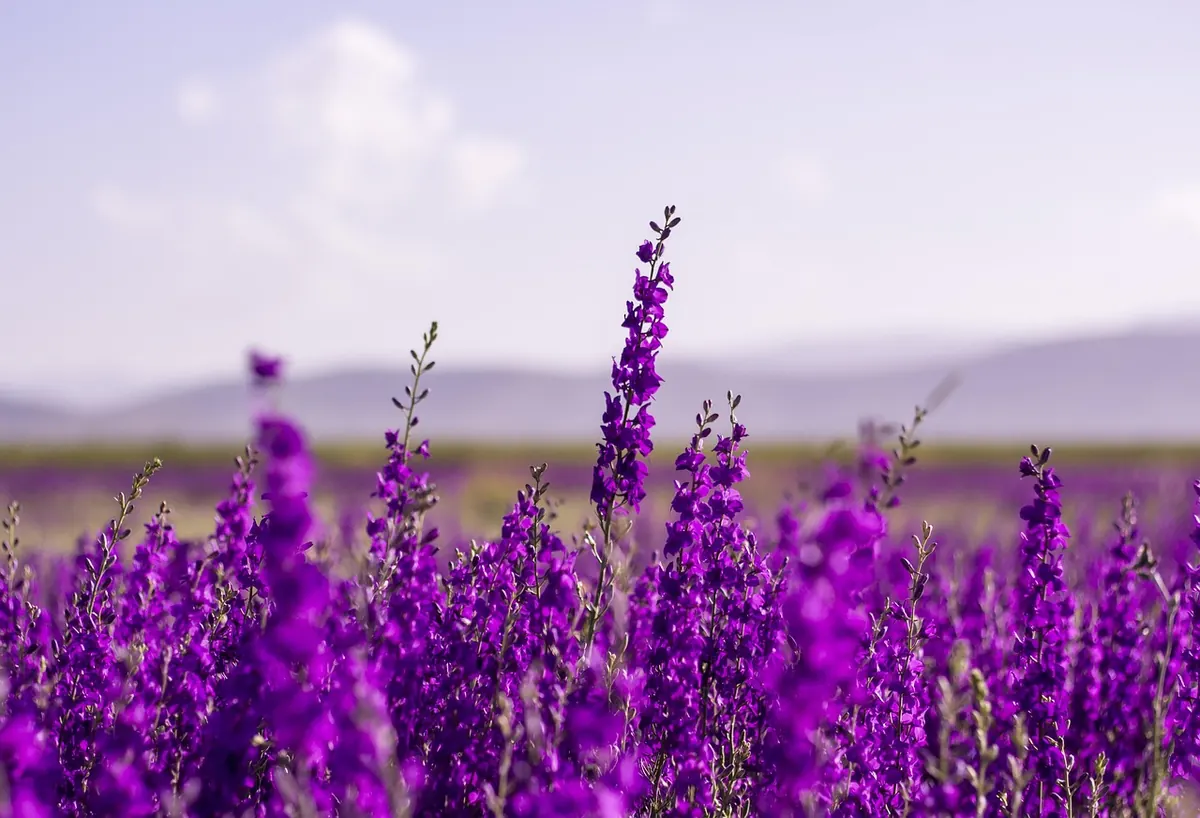
Photo: kucukgulberkan / Pixabay