A north-facing patio is often the last part of the garden to get any attention, and the first to be written off. In the UK it may catch only a slant of early sun, or a bright hour in late evening in June, and the paving can stay damp long after the rest of the garden has dried. Treat that as a design brief rather than a problem. Shade suits ferns, hostas and woodland plants that scorch elsewhere, and a patio that stays cool is a pleasure in a heatwave. What it needs is help with light, a layout that makes a few square metres feel generous, and planting that looks good in March as well as July.
Treat light as a material
Before you buy a single plant, look at the surfaces. A dark slate patio under a dark fence in shade will always feel like a cellar, however well you plant it. Pale buff sandstone, light grey porcelain, buff-coloured gravel or a resin-bound surface bounce what light there is back upwards, where you notice it. If you are keeping existing paving, paint the boundary instead: a warm off-white or soft sage on a fence panel lifts the whole space. Avoid deep black, charcoal and dark brown stains in a small shaded area.
Then add two or three sources of reflected light. An outdoor mirror fixed to a wall that faces the brightest part of the sky will double the apparent size of a courtyard and bring in cloud light on dull days. Fix it properly with masonry or fence-rated fittings, and angle it so it does not throw glare into a neighbour's window. A shallow water bowl or a small rill does a similar job, catching sky and moving it around; the sound also softens traffic noise.
For evenings, use warm white lighting rather than cold white. A 2700K uplighter tucked into a border, aimed up a wall, makes more of the space than a single overhead floodlight. Low-level lights along a step edge are practical as well as atmospheric.
Lay out a small patio so it feels bigger
The commonest mistake on a compact patio is spreading pots and furniture evenly across the whole area. It reads as clutter and leaves you nowhere to stand. Instead, keep a clear rectangle of paving for the table and chairs and push the planting to the edges, where it also softens the boundaries.
- Work on the diagonal. A path or a run of paving that crosses from corner to corner reads longer than one running parallel to a fence.
- Repeat pot sizes. Two or three sizes in the same material look deliberate; ten mismatched pots look like a car boot sale.
- Go bigger than feels sensible. One large pot with a fatsia, a clipped evergreen or a small acer makes a focal point. Small pots dry out faster and disappear visually.
- Use the walls. Wall-mounted trellis, a folding shelf, a bench with storage underneath, or hooks for lanterns all free up floor space.
- Hide the bins and the hose. A slatted screen or a lidded bench does more for how the space feels than another plant.
Choose plants for foliage first
In shade, leaves hold the design together because they keep their colour whether or not the sun appears. Flowers become the bonus rather than the whole plan. Aim for a mix of texture — ferny, bold, grassy, glossy — and let pale greens and golds do the lightening.
- Ferns: dryopteris and polystichum for structure, Athyrium niponicum for silver and burgundy.
- Hostas: the variegated and gold-leaved forms glow in low light. Protect new growth from slugs in spring.
- Grasses: Hakonechloa macra spills over a pot edge and brightens a dark corner better than almost anything.
- Colour from leaves: heuchera, tiarella, brunnera and pulmonaria in lime, caramel and silver.
- Evergreen bones: sarcococca, skimmia, mahonia, fatsia and ivy keep the space from looking bare in winter.
Flowers that read at dusk
White, cream, pale yellow and soft pink show up in low light; deep crimson and purple vanish into the shade. Astilbe, Japanese anemone, cyclamen and white foxgloves all work hard here. Scent matters too, because a north-facing patio is often used in the evening. Sarcococca in winter, osmanthus in autumn and a honeysuckle over the back wall will perfume the whole space.
Layer planting across the year
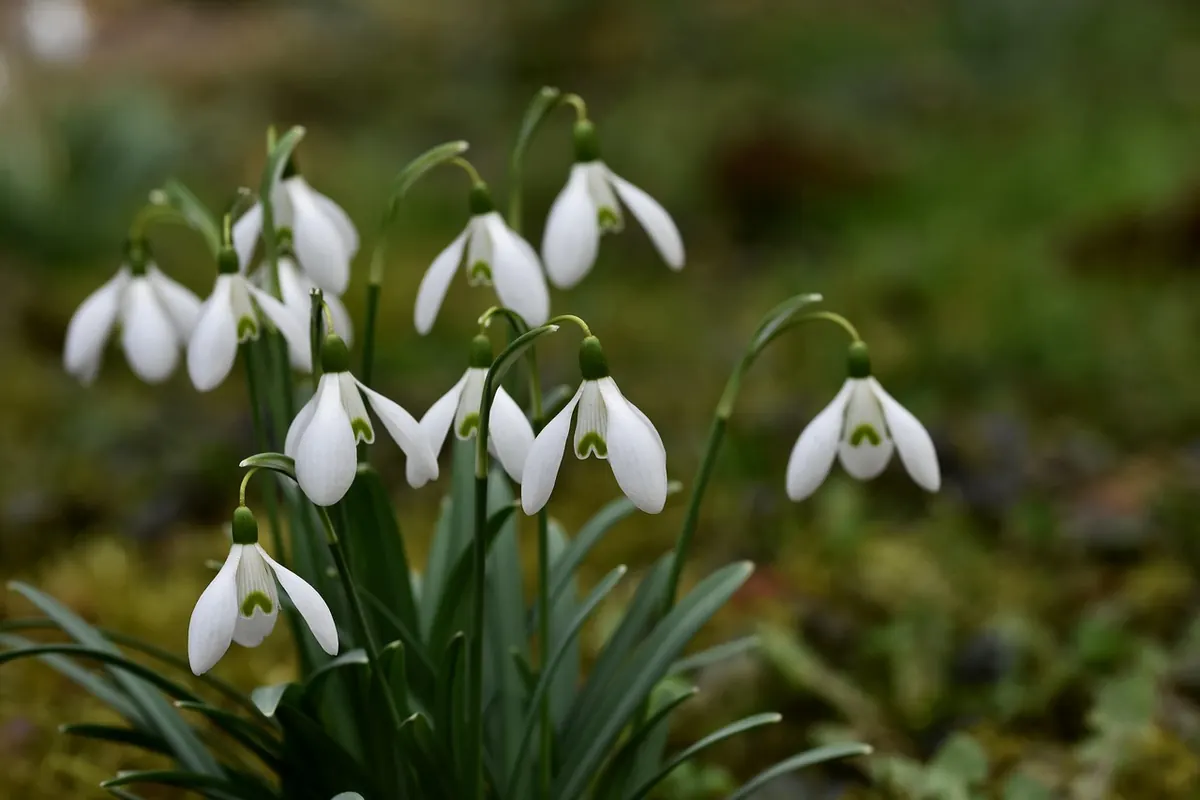
Shady patios fail when they are planted for one moment. Build in four small moments instead. In late winter and spring, snowdrops, cyclamen, narcissi and epimedium flower before any canopy closes overhead. In summer, the ferns, hostas and astilbes take over. Autumn brings anemones, heuchera colour and turning fern fronds. Winter relies on evergreens, hellebores and pots refreshed with skimmia, ivy and a few cyclamen.
Underplanting bulbs in autumn is the cheapest way to buy yourself a better February. Push them into the border soil rather than a pot, where they will naturalise and need almost no attention.
Make it weatherproof enough to use
A north-facing patio needs shelter more than shade. A small canopy over the back door, a pergola with one solid section, or a projecting porch roof will give you a dry patch of paving for a cup of tea in drizzle. A slatted screen or trellis with an evergreen climber cuts wind without blocking light. If you use a fire pit or brazier, check whether you are in a smoke control area first, and keep it well away from fences and overhanging shrubs.
Deal with damp, moss and slugs
Shaded paving stays wet, and wet paving grows algae, which is slippery underfoot. Brush it regularly, particularly through autumn, and clean it once or twice a year with a suitable patio cleaner, taking care where the runoff goes. Textured paving grips better than polished; porous or permeable surfaces drain better.
In pots, use a loam-based compost with added grit, and check before watering — shade pots dry slowly and more plants are lost to overwintering wet than to drought. Slugs are the main pest; a spring application of nematodes, plus an evening patrol after rain, keeps hostas intact.
A simple plan to start with
- Choose one pale surface and one pale paint colour, and use them consistently.
- Mark out a single clear rectangle of paving for seating, and give everything else to planting.
- Buy three pots in the same material: one large, two medium.
- Fill them with an evergreen, a fern and something trailing.
- Add a mirror or an uplighter so the space has light after four o'clock.
- Plant bulbs in autumn for a lift in late winter.
Spend a few hours sitting out there at different times of day, in different seasons, before you commit to a layout. A north-facing patio will never be a sun trap, and it does not need to be. Treated as a cool, green, sheltered room, it can easily become the most comfortable seat in the garden.